
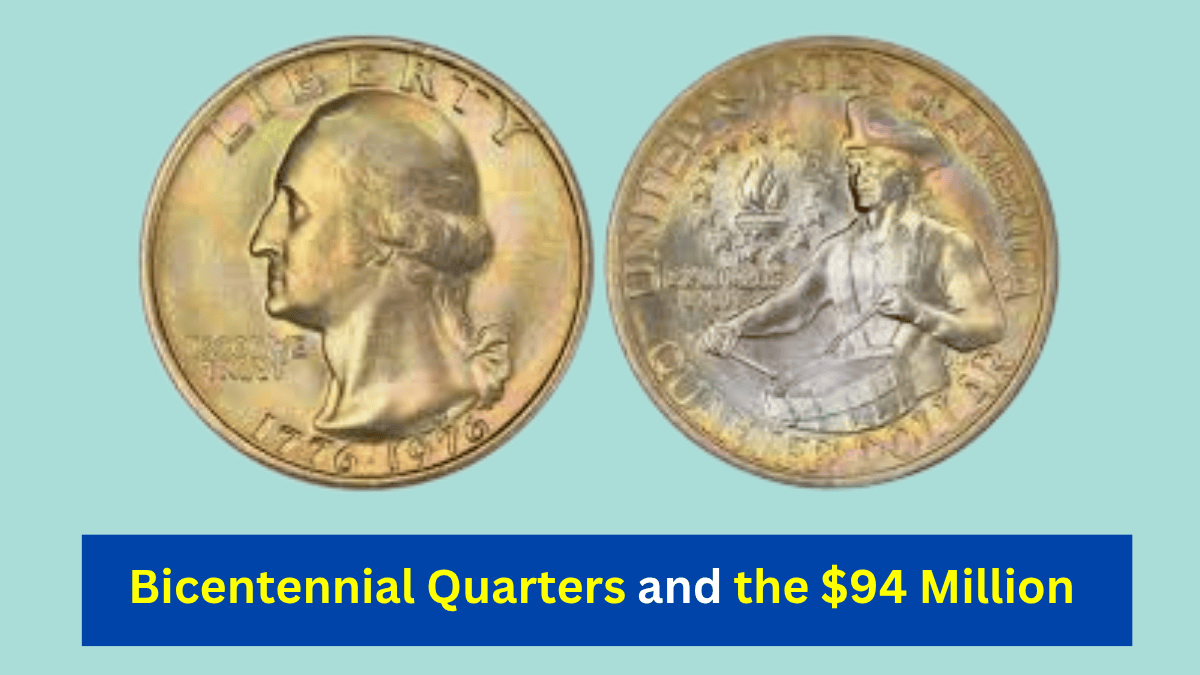
Rumors have been circulating online claiming that a handful of 1976 Bicentennial quarters are worth an incredible $94 million each. But are these stories true? Let’s separate the facts from fiction and take a closer look at what really makes some Bicentennial quarters valuable and what doesn’t.
Table of Contents
The Truth Behind the $94 Million Claim
Despite what viral posts and clickbait headlines suggest, there is no verified evidence that any Bicentennial quarter has sold for $94 million or anywhere near that amount.
According to numismatic experts and major auction houses, such claims are grossly exaggerated.
Websites such as GreatCollections and CoinValueChecker have clarified that while some rare or error Bicentennial quarters can fetch thousands—or even tens of thousands—of dollars, none have ever reached multi-million-dollar figures. The “$94 million” story appears to be a myth fueled by social media and misleading headlines.
What Is a Bicentennial Quarter?
The Bicentennial quarter was minted in 1975 and 1976 to celebrate the 200th anniversary of American independence.
It features a special design: the familiar portrait of George Washington on the front and a unique drummer boy design by Jack L. Ahr on the reverse, along with the dual date 1776–1976.
More than 1.6 billion Bicentennial quarters were produced across the Philadelphia, Denver, and San Francisco Mints. Because of this high mintage, most are worth only their face value—25 cents—unless they have rare errors or are in pristine condition.
What Can Make a Bicentennial Quarter Valuable?
While a $94 million price tag is unrealistic, some Bicentennial quarters do carry real collector value. The main factors include:
1. Rare Minting Errors
Coins with visible minting mistakes—such as double-die strikes, off-center images, or planchet flaws—can be worth hundreds to thousands of dollars, depending on rarity and condition.
2. Silver Proof Versions
The San Francisco Mint also released special 40% silver-clad Bicentennial quarters as part of proof and collector sets.
These silver coins can sell for $10 to $300 or more, especially if graded in near-perfect condition.
3. High-Grade Condition
Quarters graded MS67 or higher by professional services such as PCGS or NGC are rare and can attract strong bids from collectors.
For example, a pristine 1976-S silver proof quarter once sold for several thousand dollars at auction.
How to Tell If You Have a Valuable Quarter
If you believe you might own a rare Bicentennial quarter, here’s how to find out:
- Check for a Mint Mark –
- No mint mark = Philadelphia
- “D” = Denver
- “S” = San Francisco (often silver or proof)
- Look for Errors or Unusual Details –
Double lettering, missing elements, or misaligned designs could increase value. - Inspect the Condition –
Coins with little or no wear are worth submitting for professional grading. - Consult a Reputable Expert –
Get your coin authenticated by a trusted dealer or a certified grading company to determine its true market value.
Realistic Value Ranges
| Type of Bicentennial Quarter | Typical Value (USD) |
|---|---|
| Circulated Clad Quarter | $0.25 – $1 |
| Uncirculated Clad Quarter | $1 – $5 |
| Silver Proof (S Mint) | $10 – $300 |
| Major Error Coin | $500 – $5,000+ |
| Highest Auctioned Example | Around $10,000+ |
Final Verdict
The viral headline claiming that some Bicentennial quarters are worth $94 million each is false.
However, collectors continue to show strong interest in these historic coins—especially rare, silver, or error varieties.
If you have a 1776-1976 quarter tucked away, it’s still worth checking. While you won’t retire on it, you might discover a small piece of U.S. history with a story worth more than face value.